Join the Field Museum for thought-provoking conversations with science, arts, and community leaders from Chicago and around the world.
RSVP to sessions of your choice
Create an account to add Symposium sessions to your schedule
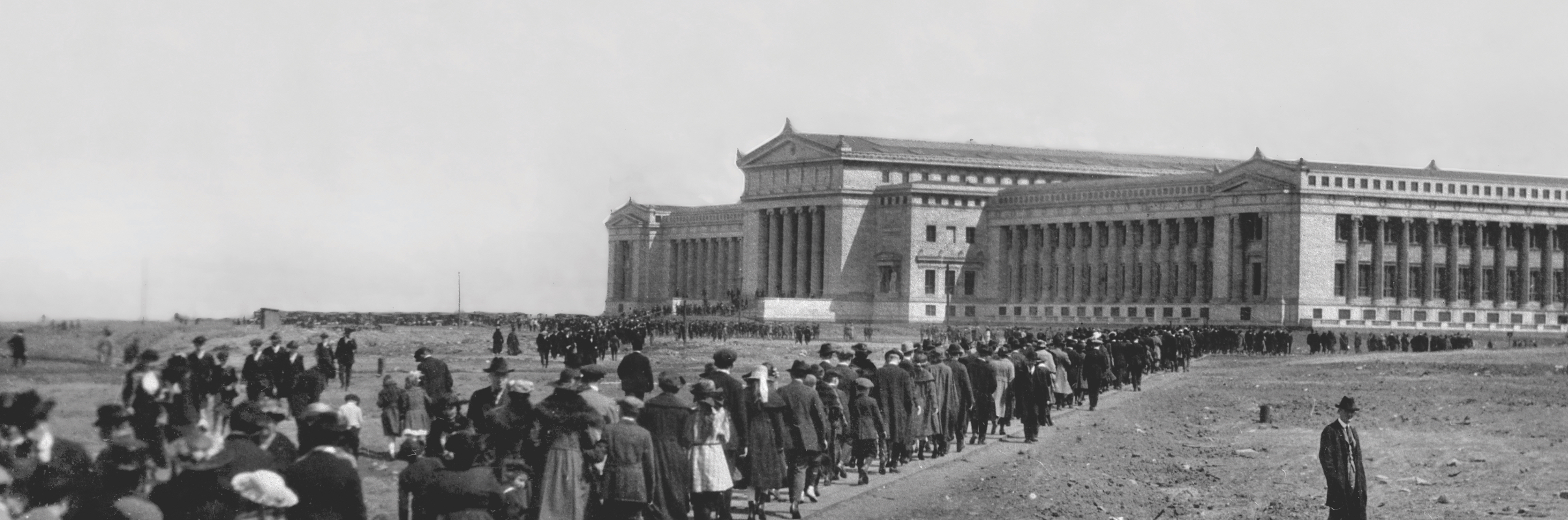
Photo Caption: Opening day at the Field Museum’s current lakefront location.
Would you like to attend the symposium? Follow the below steps to get registered and add sessions to your schedule.
To attend the symposium, you will need to first register for the event. Click the ‘Register for the Symposium’ button below if you have not yet done so.
Symposium sessions are spread out throughout the week at various times. View the Schedule page to see all sessions, read descriptions, and view the speakers involved for each.
For each session you’d like to attend, click the ‘Add to Schedule’ button and fill out the brief form. Select ‘Submit to add to Schedule’ to finish.
Already registered? View Schedule
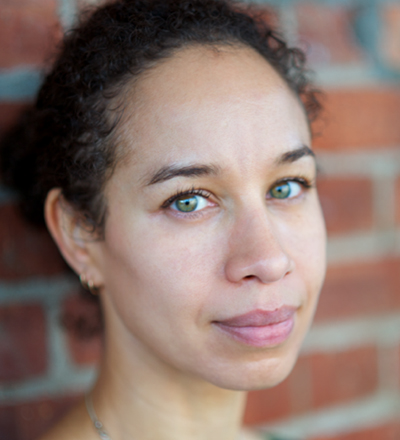
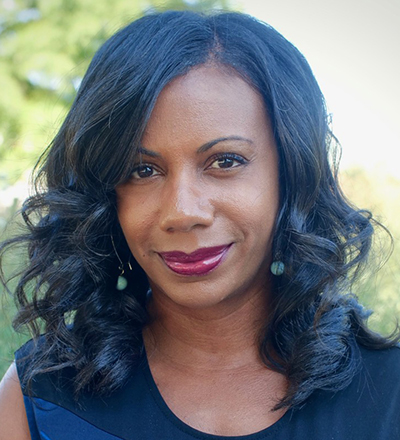
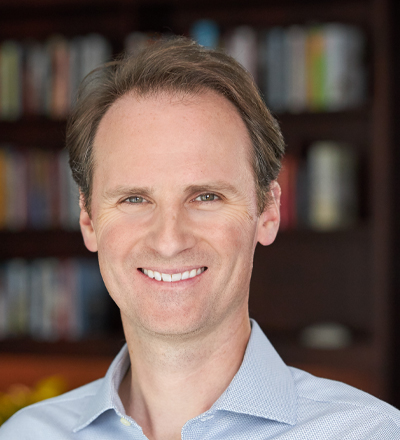
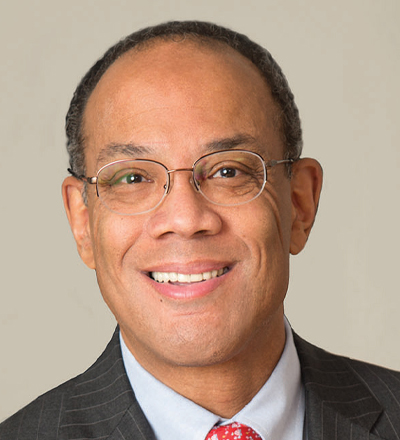
We are honored to have a group of leading scholars and thought leaders as participants in The Role of Museums in Public Dialogue: Equity, Access, Community on Friday, September 17, 2021 at 11am CT. Natalie Moore, acclaimed WBEZ Chicago Reporter, will serve as a moderator alongside panelists Louise Bernard, PhD, Director of the Obama Presidential Center Museum, John Palfrey, President, John D. and Catherine T. MacArthur Foundation, and John W. Rogers Jr., Co-CEO, Ariel Investments. Each participant brings a wealth of knowledge and experience on the intersections of accessibility, meaningful inclusivity, and community engagement, and we are delighted to have them for what will be a fascinating conversation.
Friday
September 17
|
 in-person

Museums around the nation are facing difficult histories, and many are determined to do better in the future. How do museums drive change? How do they build trust? How can they be part of creating educational and economic opportunity?
It is a privilege to welcome Louise Bernard, PhD, Director of the Obama Presidential Center Museum; Natalie Moore, WBEZ Chicago Reporter; John Palfrey, PhD, President of the John D. and Catherine T. MacArthur Foundation; and John. W. Rogers Jr., CEO of Ariel Investments, to discuss how museums can develop and sustain the values of diversity, equity, access and inclusion.
Not yet registered for the symposium? Register Here
Help the museum produce more events, like the Field Forward Symposium, by making a donation to fund future projects.
Natalie Moore covers segregation and inequality.
Her enterprise reporting has tackled race, housing, economic development, food injustice and violence. Natalie’s work has been broadcast on the BBC, Marketplace and NPR’s Morning Edition, All Things Considered and Weekend Edition. Natalie is the author of The South Side: A Portrait of Chicago and American Segregation, winner of the 2016 Chicago Review of Books award for nonfiction and a Buzzfeed best nonfiction book of 2016. She is also co-author of The Almighty Black P Stone Nation: The Rise, Fall and Resurgence of an American Gang and Deconstructing Tyrone: A New Look at Black Masculinity in the Hip-Hop Generation.
Natalie writes a monthly column for the Chicago Sun-Times. Her work has been published in Essence, Ebony, the Chicago Reporter, Bitch, In These Times, the Chicago Tribune, the New York Times, the Washington Post and the Guardian. She is the 2017 recipient of Chicago Library Foundation’s 21st Century Award. In 2010, she received the Studs Terkel Community Media Award for reporting on Chicago’s diverse neighborhoods. In 2009, she was a fellow at Columbia College’s Ellen Stone Belic Institute for the Study of Women and Gender in the Arts and Media, which allowed her to take a reporting trip to Libya. Natalie has won several journalism awards, including a Casey Medal for Meritorious Journalism. Other honors are from the Radio Television Digital News Association (Edward R. Murrow), Public Radio News Directors Incorporated, National Association of Black Journalists, Illinois Associated Press and Chicago Headline Club. The Chicago Reader named her best journalist in 2017. In 2018, she received an honorary doctorate from Adler University. In These Times gave her the 2017 Voice of Progressive Journalism Award. Natalie frequently collaborates with Chicago artist Amanda Williams.
She is a 2021 USA Fellow. The Pulitzer Center named her a 2020 Richard C. Longworth Media Fellow for international reporting. In 2021, University of Chicago Center for Effective Government (CEG), based at the University of Chicago Harris School of Public Policy, welcomed her its first cohort of Senior Practitioner Fellows.
Prior to joining WBEZ staff in 2007, Natalie was a city hall reporter for the Detroit News. She has also been an education reporter for the St. Paul Pioneer Press and a reporter for the Associated Press in Jerusalem.
Natalie has an M.S.J. in Newspaper Management from the Medill School of Journalism at Northwestern University and a B.A. in Journalism from Howard University. She has taught at Columbia College and Medill. Natalie and her husband Rodney live in Hyde Park with their four daughters.
Foreman Bandama is an African archaeologist with specializations in ceramics, glass beads, archaeometallurgy and heritage studies. His doctoral thesis from the University of Cape Town, blended conventional material culture studies and archaeometallurgical analyses to explore the history, innovation and technology of tin and bronze metallurgy in southern Africa. His work draws liberally from African theory and his lived experience as a product of a crafting rural Tsonga family from Zimbabwe. His recent awards include the South African DHET’s Future Professorship, Y2 NRF Rating and the 2019 best research paper prize in Antiquity journal.
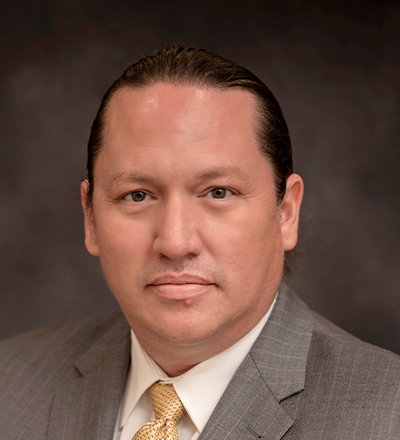
Ben Barnes currently serves as the Chief of the Shawnee Tribe. Prior to becoming Chief, he worked as a Shawnee language volunteer alongside his brother in hopes to revive the Shawnee language. Upon taking office with only a small number of fluent Shawnee speakers remaining, Chief Barnes declared a State of Emergency for the Shawnee Language as well as declaring the years 2021–2030 the Decade of the Shawnee language.
Ben is also a member of his people’s traditional, religious community at White Oak, Oklahoma. It is from this frame of reference that he hopes to guide the Shawnee Tribe’s future, recognizing the importance of preserving the culture, language, and religion of the Shawnee so as to inform the crafting of tribal policy and law. Perhaps more germane to this discussion, is how Chief Barnes has created collaborative research with universities and institutions to publish research with an oft-overlooked indigenous contextualization.
Dr. Louise Bernard is the founding Director of the Obama Presidential Center Museum.
As a Senior Content Developer and Interpretive Planner in the New York office of the museum design firm Ralph Appelbaum Associates, she worked on the design team that developed the Smithsonian’s National Museum of African American History and Culture, along with other national and international projects. She previously served as Director of Exhibitions at the New York Public Library, as Curator of Prose and Drama for the Yale Collection of American Literature at the Beinecke Rare Book and Manuscript Library at Yale University, and as Assistant Professor of English at Georgetown University. She received a BA Hons in Drama from the University of Manchester, an MA in Theatre History and an MA in English Literature from Indiana University, Bloomington, and a Ph.D. in African American Studies and American Studies from Yale. Her current research engages with the literary archive, material culture, museology, public history, and interpretive planning and design. She serves on the Advisory Council for the Johnson Publishing Company Archive, and is a recipient of the 2021 College of Arts and Sciences Distinguished Alumni Award from Indiana University.
Johari Cole-Kweli is a sustainability professional and driver of 21st Century STEM, environmental education, and Ag and Eco-stewardship. She is a former research microbiologist for several major pharmaceutical companies including Bristol Myers and Eli Lilly & Co. For the past 25 years, Jahari has been the owner and operator of a 50-acre organic farm homestead dedicated to local food access, education and safety specifically in low-income communities and communities of color. She hosts on-farm research and food demonstrations, internships, Ag and Eco-Tourism, as well as environmental camps for next-gen scientists and environmentalists. Jahari serves as President and Managing Director of the Community Development Corporation of PHP, a volunteer-led community development organization in the Pembroke-Hopkins Park area; and consultant to the Field Museum, US Fish & Wildlife and other conservation institutions in sustainable development and community relations. She is currently a doctoral student in STEM education at Walden University.

Biography coming soon.
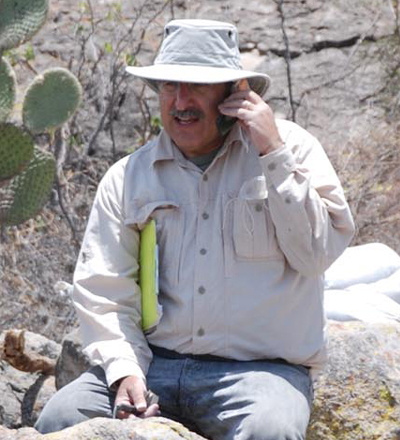
Gary Feinman is the MacArthur Curator of Anthropology at the Field Museum.
He received his Bachelor’s degree in Anthropology from the University of Michigan, Ann Arbor, and he conducted his doctoral research with the City University of New York.
Gary has extensive experience leading international archaeological field projects. He recently led excavations at Lambityeco in the Valley of Oaxaca, Mexico, which is his long-time study region in Mesoamerica. He is also co-director of the Coastal Shandong Archaeological Settlement Pattern Project, which has now surveyed in eastern Shandong Province for 19 field seasons.
He has published many books and scholarly articles, both built on his field studies as well as a range of theoretical topics that include cities, governance, social networks, inequality, and markets. All of which he approaches with an historical lens.
Gary is the Co-Curator of the Field Museum’s Ancient Americas exhibition, the Cyrus Tang Hall of China, and a suite of temporary exhibitions, including Chocolate and the Day of the Dead.
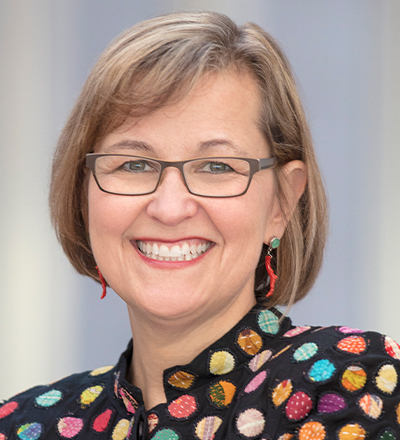
Kaywin Feldman is director of the National Gallery of Art in Washington, DC. Prior to joining the National Gallery in March of 2019, Feldman led the Minneapolis Institute of Art as its Nivin and Duncan MacMillan Director and President from 2008 to 2019. Prior to Minneapolis, Feldman directed the Memphis Brooks Museum of Art from 1999 to 2007. She is a trustee of the National Trust for Historic Preservation, the White House Historical Association, and the Chipstone Foundation, and a member of the State Hermitage Museum International Advisory Board. She is a past president of the Association of Art Museum Directors and past chair of the American Alliance of Museums. She lectures and publishes widely on many aspects of museums in the twenty-first century.
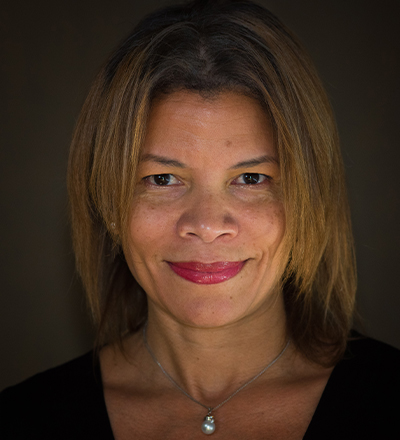
Dina A. Griffin, FAIA, NOMA, IIDA, NCARB, became president of Interactive Design Architects (IDEA) in 1999. Under her leadership, along with partners Charles Young and Robert Larsen, IDEA has successfully completed a multitude of projects for a variety of clients. Dina has been instrumental in bolstering the firm’s commitment to collaboration and the opportunity to create, learn and interact with other thought leaders in the profession. The firm has partnered with internationally renowned firms including Pelli Clarke Pelli Architects, and Renzo Piano Building Workshop. In 2016, IDEA was awarded The African American Cultural Center project at Dina’s alma mater, the University of Illinois. That same year, IDEA was selected to join the team of Tod Williams|Billie Tsien Architects to design the Barack Obama Presidential Center in Chicago.
Dina’s belief that change is inspired through leadership and has motivated her active involvement both within and outside the profession. In addition to past leadership and board positions with the National Organization of Minority Architects and the American Institute of Architects, Dina currently serves on the Illinois Architect Licensing Board as Chair and has served as treasurer for Region 4 of National Council for Architectural Registration Boards (NCARB).
Reaching aspiring students is fundamental to Dina’s mission to encourage and guide minorities interested in building valuable careers in architecture. She was elevated to the College of Fellows of the American Institute of Architects in recognition of her service to the profession, and to society, through her dedicated outreach to minority architecture students and emerging professionals.
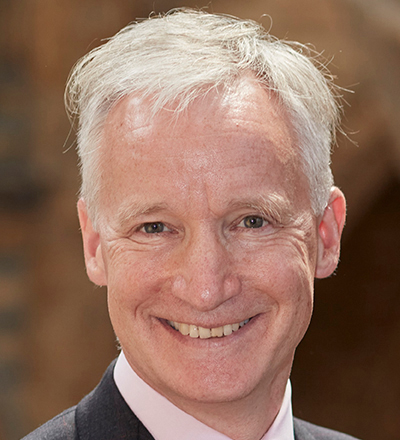
Doug was appointed Director of The Natural History Museum in December 2020.
Previously, Doug was Country Manager of Amazon UK and President of Amazon China. Earlier roles included the civil service, partner at McKinsey and Company, Director at Asda-Walmart and founder CEO of internet start-up Blueheath.
Doug is also Chairman of the British Heart Foundation, a non-executive Director at the Department of Health and Social Care, and former Chairman of the Science Museum.
He has degrees in Mathematics from the University of Cambridge and a PhD in Computing from the University of Edinburgh, and previously taught mathematics and computing at the University of Aarhus in Denmark.
He is a former Scottish international triathlete, 12 times Ironman, keen ski mountaineer with over 20 first ascents, and an enthusiastic mountain runner. He is married with two children.
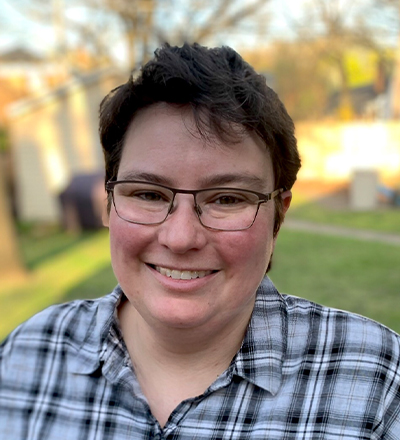
Erika joined the Keller Science Action Center over 10 years ago. They bring their background in both Ecology and Mapping to the center’s work on urban monarch butterflies and in Pembroke Township, Illinois. Erika’s favorite part of their job is collaborating with their social science colleagues to build conservation and quality of life in urban places.
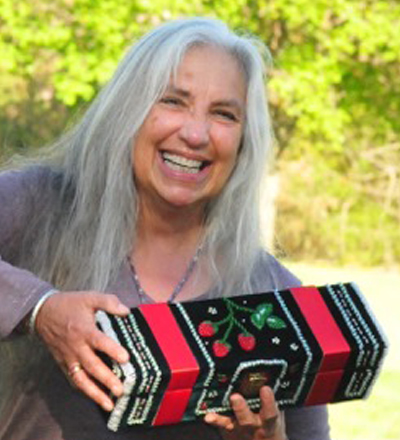
Karen Ann Hoffman has been beading peace, beauty, and meaning through her Haudenosaunee Raised Beadwork since the 1990s. Haudenosaunee Raised Beadwork (also known as Iroquois Raised Beadwork) is unique to the Six Nations of the Haudenosaunee Confederacy, characterized by lines of beads that arch above the textile surface for a three-dimensional effect, typically sewn onto velvet. Hoffman is a respected national leader in this art, known for reimagining existing forms to expand their significance for today and the future.
Retired from a sales career, Hoffman pursues her twin goals of strengthening Haudenosaunee Raised Beadwork within the Haudenosaunee community and gaining recognition for it more widely. She produces two to three large pieces each year, with some in the permanent collections of the Smithsonian National Museum of the American Indian, the Field Museum, the Iroquois Indian Museum, and the Oneida Nation Museum. She teaches and hosts a beading circle at her home. She is a co-organizer of the annual International Iroquois Beadwork Conference and has curated multiple exhibits of work by Native artists.
Biography coming soon.
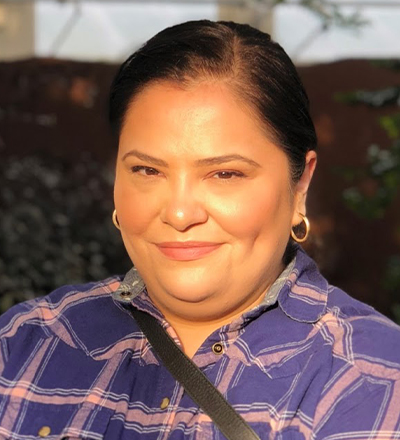
Lorena Lopez is Senior Community Engagement Specialist for the Keeler Science Action Center at the Field who works jointly with partner organizations and community members to understand and advance their conservation and community well-being goals in the Chicago and Calumet regions.
Her ultimate goal is to connect people to nature and encourage them to play an active role in restoring our natural areas. Lorena does this by meeting people where they are at – physically and emotionally. On her favorite days, find her hosting special events in Beaubien Woods, providing community members with native seeds or plant plugs, connecting with these people, and encouraging their participation in nature near their homes. With an environmental justice lens, she works to be a connector for healing and connecting with the nearby natural areas.
In addition to working at the Field Museum, Lorena has served on the Advisory Council of Environmentalists of Color. Her past work experience includes Faith in Place, where she is currently a board member. As the Open Space Coordinator for the Little Village Environmental Justice Organization (LVEJO), she led community mapping to demand a new, clean, safe park in Little Village. She and her team won significant victories, including the clean-up of 171 homes from cancer-causing toxic chemicals and the addition of new infrastructure around a park site. Lorena’s passion for nature grew for her love of her community when she started her first community garden at age 10. She and her partner are the proud parents of three children, and a native Chicago Southsider and proud to have Mexican roots from El gran Estado de Michoacán the wintering state of the Monarch Butterfly.
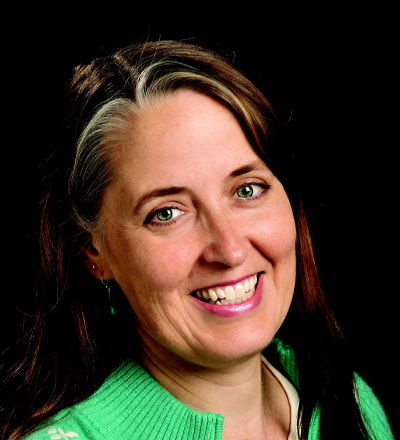
Margaret Noodin was born in Colorado and grew up in Chaska, Minnesota and has been blessed with many mentors and teachers as she has worked in language and education. She has spent a lifetime learning and teaching the language of her ancestors. Her family names include: O’Donnell, Orr, Hill, Bernard, Bean, Lavallee and Monplasir. She identifies as American, Anishinaabe, Irish and Metis. At the University of Wisconsin–Milwaukee she is Professor of English and American Indian studies and Director of the Electa Quinney Institute for American Indian Education. She is the author of Bawaajimo: A Dialect of Dreams in Anishinaabe Language and Literature, Weweni and What the Chickadee Knows (Wayne State University Press) which are both bilingual collections of poetry in Anishinaabemowin and English. To hear her work, visit www.ojibwe.net.
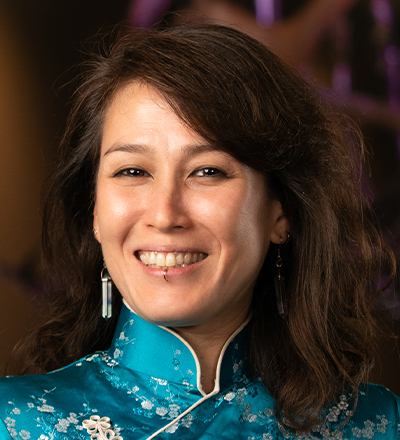
Jingmai O’Connor, PhD is the Associate Curator of Fossil Reptiles with the Negaunee Integrative Research Center at the Field Museum. She became passionate about paleontology later in life while studying Geology at Occidental College. She received her PhD studying Mesozoic birds at the University of Southern California. Prior to joining the Field Museum, Jingmai worked with the Institute of Vertebrate Paleontology and Paleoanthropology (IVPP) in Beijing, China, becoming their youngest-ever professor.
Jingmai’s research explores the evolution of flight in the Dinosauria, the dinosaur-bird transition, and the evolution of modern avian physiology. She has conducted fieldwork in China, Mongolia, Romania, South Africa, Canada, and the United States.
Jingmai’s research has been published in Nature, Science, the Proceedings of the National Academy of Sciences, and Current Biology. In 2019, she was awarded the Schuchert Award for excellence in Paleontology under the age of 40 by the Paleontological Society.
In addition to her curatorial duties at the Field Museum, she is a research associate at the Los Angeles Natural History Museum and the American Museum of Natural History in New York, an adjunct professor at the IVPP, and she serves as an editorial board member for several journals.
John Palfrey is President of the John D. and Catherine T. MacArthur Foundation.
Prior to joining the Foundation, Palfrey served as Head of School at Phillips Academy, Andover.
Palfrey was the Henry N. Ess III Professor of Law and Vice Dean for Library and Information Resources at Harvard Law School.
From 2002 to 2008, Palfrey served as Executive Director of the Berkman Klein Center for Internet & Society, which seeks to explore and understand cyberspace. He is founding board chair of the Digital Public Library of America, and is the former board chair of LRNG, a nonprofit launched and supported by MacArthur.
He is the author or coauthor of several books, including Safe Spaces, Brave Spaces: Diversity and Free Expression in Education. A revised and expanded version of his book Born Digital: How Children Grow Up in a Digital Age, which he co-authored with Urs Gasser, was issued in 2016.
Palfrey serves on the board of the John S. and James L. Knight Foundation and is a member of the American Academy of Arts & Sciences.
Palfrey holds a JD from Harvard Law School, an MPhil from the University of Cambridge, and an AB from Harvard College.
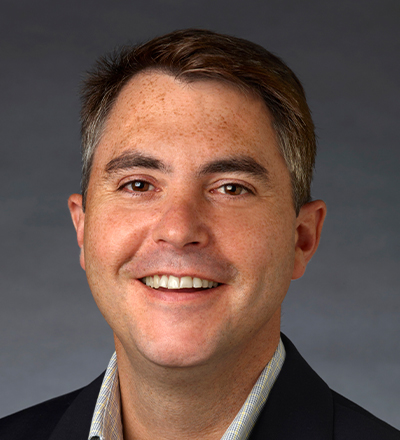
Bill Parkinson is a specialist in European and Eastern Mediterranean Prehistory. His anthropological research explores the social dynamics of early village societies and the emergence of early states.
Bill is the American Director of the Körös Regional Archaeological Project, an international, multi-disciplinary research project aimed at understanding the social changes that occurred on the Great Hungarian Plain throughout the Holocene.
He is the American Co-Director of The Diros Project, a multi-disciplinary regional research project that explores the social changes that occurred on the western Mani Peninsula of southern Greece throughout the Pleistocene and Holocene.
He received his B.A. in Anthropology from the University of Illinois at Chicago, M.A. in Anthropology from the University of Michigan, and Ph.D. in Anthropology from University of Michigan.
Bill is currently a professor in the Department of Anthropology at the University of Illinois at Chicago.
John’s passion for investing began at age 12 when his father began buying him stocks as Christmas and birthday gifts. His interest in equities grew at Princeton University, where he majored in economics, and over the two-plus years he worked as a stockbroker for William Blair & Company, LLC. In 1983, John founded Ariel to focus on patient, value investing within small- and medium-sized companies. While our research capabilities have expanded across the globe, patience is still the disciplined approach that drives the firm today. His professional accomplishments extend to the boardroom where he is a member of the board of directors of McDonald’s, NIKE and The New York Times Company. John also serves as vice chair of the board of trustees of the University of Chicago. In 2008, John was awarded Princeton University’s highest honor, the Woodrow Wilson Award, presented each year to the alumnus or alumna whose career embodies a commitment to national service. Following the election of President Barack Obama, John served as co-chair for the Presidential Inaugural Committee 2009, and more recently, he joined the Barack Obama Foundation’s Board of Directors. John received an AB in economics from Princeton University, where he was also captain of the varsity basketball team.
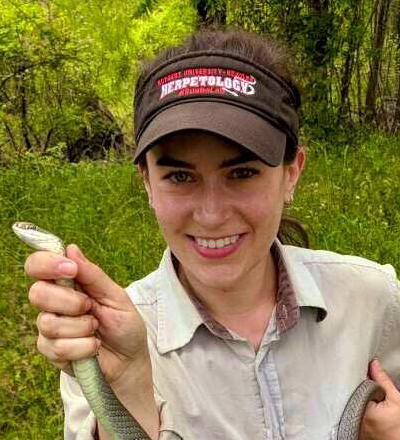
Sara Ruane, PhD, is the Assistant Curator of Herpetology at the Field Museum.
Sara has been passionate about snakes, frogs and other reptiles and amphibians since she was a young child and spent countless time walking in the woods, turning over logs and rocks with her grandmother. This led her as an undergraduate to study biology at the University of Massachusetts Amherst, and then to pursue a masters degree at the University of Central Arkansas, where she studied nest-site selection of Blanding’s turtles in Nebraska. She completed her doctoral work at the City University of New York; her dissertation project used molecular data to better understand the taxonomic relationships of milk snakes across their ranges in the United States, Central, and South America. Sara conducted post-doctoral research at the American Museum of Natural History, focusing on the phylogenetics and describing unrecognized diversity of Malagasy snakes, and at the Louisiana State University Museum of Natural Science, studying poorly known snakes of Papua New Guinea and the surrounding areas.
Prior to joining the Field Museum, Sara was at Rutgers University-Newark. With the Field, her research focuses on describing and quantifying global reptile and amphibian diversity, in addition to addressing broad, contemporary questions in evolutionary biology.
Biography coming soon.
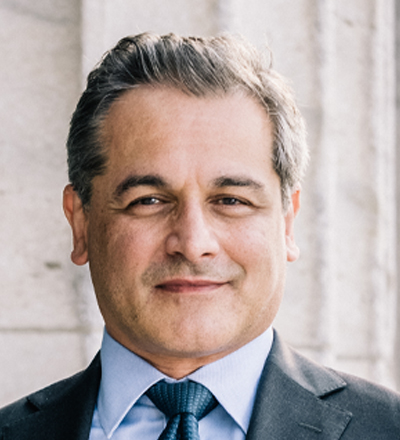
Julian Siggers has served as the President and Chief Executive Officer since September 2020.
Throughout his career, Siggers has championed the importance of communicating science to the public in a way that’s engaging and accessible. He has led countless initiatives—exhibitions, publications, programming, and digital media—to transform museums into vibrant spaces for public education and discovery that belong to the whole community.
Before the Field, Siggers was the director of the Penn Museum in Philadelphia from 2012 to 2020. He oversaw the renovation of many of the museum’s galleries and public spaces, including the Middle East Galleries, Africa Galleries, and Mexico and Central America Gallery. He also established the Center for the Analysis of Archaeological Materials, an interdisciplinary center for training students in archaeological techniques, and led a $100 million fundraising campaign. Siggers guided implementation of new programs that welcome diverse audiences, including a program in which immigrants and refugees act as docents in galleries focused on their original countries.
Prior to the Penn Museum, Siggers was vice president for programs, education, and content communication at the Royal Ontario Museum in Toronto from 2007 to 2012 and head of narrative and broadcast development at the United Kingdom’s National Museum of Science and Industry in London.
Siggers taught prehistoric archaeology for eight years at the University of Toronto. He earned his PhD there in 1997, with a focus on prehistoric humans in the Middle East. He received his MA in prehistoric archaeology in 1988 and BA with honors in archaeology in 1986 from the Institute of Archaeology at University College London.
Siggers is a member of the International Council of Museums (ICOM) US Board of Directors.
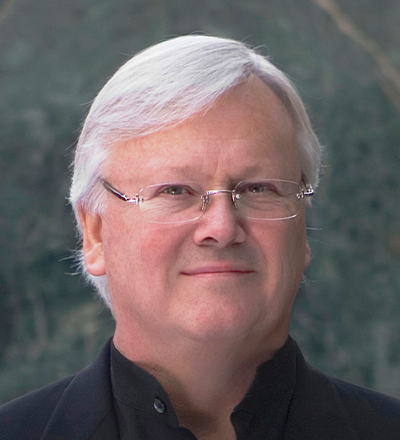
Adrian Smith, FAIA, RIBA, Founding Partner of Adrian Smith + Gordon Gill Architecture, is an architect of international renown. His designs include many landmark buildings around the world, including the two tallest structures in the world: Burj Khalifa, completed in 2010 in Dubai, United Arab Emirates and Jeddah Tower, now under construction in Jeddah, Saudi Arabia. Adrian’s designs are sensitive to a project’s physical environment, taking into consideration conditions such as location, culture, climate, geography, and social influences to achieve environmental sustainability.
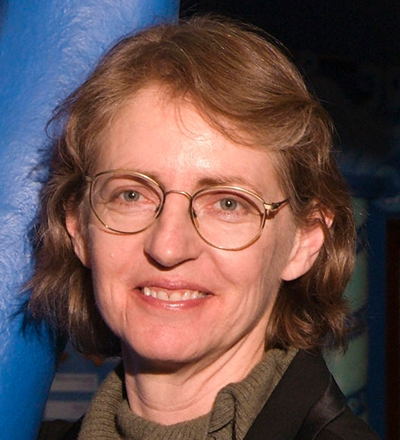
Janet Voight, Associate Curator of Zoology, is a specialist in cephalopod mollusks, especially octopuses. In terms of where she works, it is the deep sea. If you work in the deep sea, there are times when you need to be a bit of a generalist, which is how Janet got interested in the wood-boring bivalves, the Xylophagaininae, and their apparent predators, the enigmatic echinoderm, Xyloplax. Discovery reigns supreme in the deep sea, as we know less about it and the animals that live there than we do about the back side of the moon. Janet’s work is building the framework that offers to change that situation, that framework of course being based on specimens collected at sea, and available for study at the Field Museum.
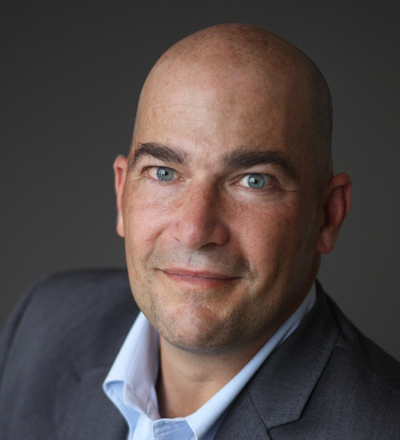
Elisha Waldman, MD was born in New York City and raised in Connecticut. After earning a BA in Religious Studies at Yale University he received his MD in Tel Aviv followed by training in pediatrics at Mount Sinai Medical Center and Pediatric Hematology-Oncology at Memorial Sloan Kettering Cancer Center in New York, and Pediatric Hospice and Palliative Medicine at Children’s Hospital Boston. He has spent a significant portion of his career abroad, most notably several years practicing pediatric oncology in Jerusalem.
Elisha is active in the American Academy of Hospice and Palliative Medicine, where he currently serves on the Board as a Director at Large. He has also published in the medical literature as well as national media outlets. He is a co-editor of and contributor to the recently released Field Manual for Palliative Care in Humanitarian Crises (Oxford U Press, 2020). He is also the author of the nonfiction book This Narrow Space about his experiences working in the Middle East (published by Random House). His writing has appeared in the New York Times, the Washington Post, Time, the Hill and elsewhere.
He is currently the Chief of the Division of Palliative Care at Lurie Children’s Hospital of Chicago, where he lives with his wife and two young sons.
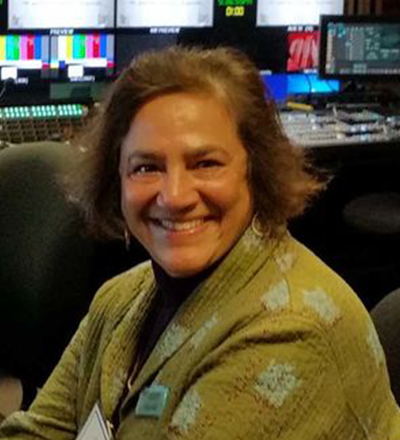
Alaka Wali, PhD, is curator of North American Anthropology at The Field Museum. As the founding director of the Center for Cultural Understanding and Change from 1995- 2010, she pioneered the development of participatory social science research and community engagement processes based in museum science. She curates the North American collection and is leading the content development component of the new Native North American Hall. She also works with colleagues in the Keller Science Action Center to implement environmental conservation programs in Chicago and the Amazon. Her research focuses on the relationship between art and the capacity for social resilience. Alaka was born in India and maintains strong ties to her birth homeland.
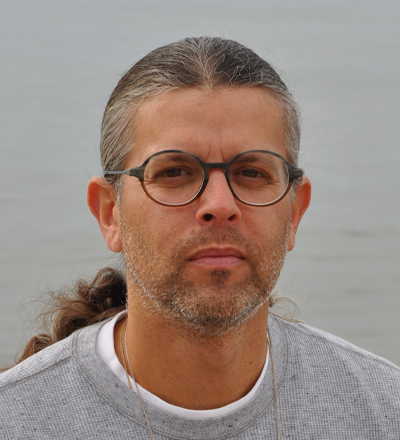
Jason Wesaw is a multi-cultural, multi-disciplinary artist, creating works in an array of media including ceramics, drawings, textiles, and traditional craft objects. His projects are informed by the natural world and convey stories that are rooted in place, reclamation, and the relationship to spirit. His creative lifestyle balances being a maker with dedicating time to Peace Keeping initiatives, repatriation, working with the land, and assisting in communities across the Great Lakes to share traditional knowledge as a means for intertribal learning and living.
Jason is Potawatomi (Turtle Clan) and lives near the historic Potawatomi settlement of Rush Lake, in southwestern Michigan. He has three children and a loving network of family, friends, and ceremonial relatives from across Turtle Island. He creates art for markets, galleries, & exhibitions, and his work is in the permanent collections of the Eiteljorg Museum (IN), Grand Valley State University (MI), and the Newberry Library (Chicago, IL).
Biography coming soon.